

A lot of homeowners assume the answer is no. They read about positive input ventilation, see repeated references to loft-mounted units and conclude that the idea ends there. If they live in a flat, a bungalow with no usable loft or a property where the loft is unsuitable, they often stop researching too early.
The reality is more useful than that. You can have a PIV system without a loft, but you usually need a different type of unit and a more careful assessment of the property.
That matters because many homes without loft access still suffer from exactly the kinds of problems PIV aims to address. Flats can trap humidity. Apartments can feel stale. Bungalows and converted spaces can struggle with condensation on windows, mould on colder walls and poor general airflow. The absence of a loft does not automatically remove the need for better background ventilation. It simply changes the kind of system the property may need.
This article explains how that works, what alternatives exist and how to judge whether a no-loft property may still suit PIV.
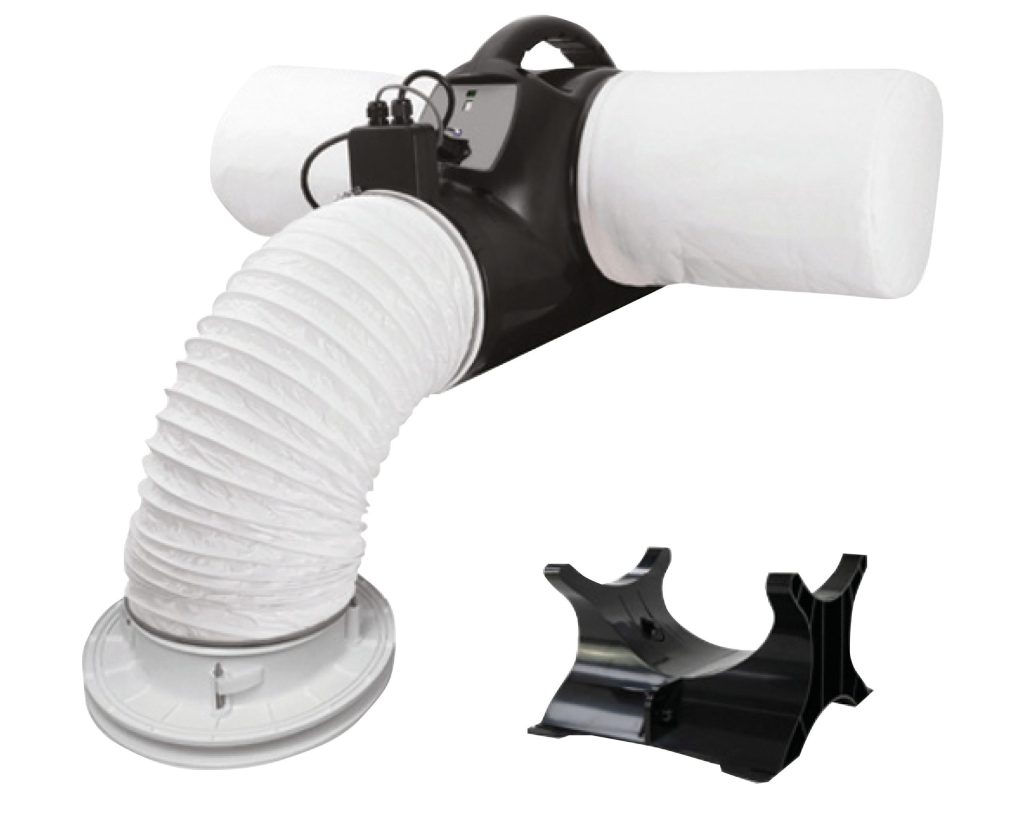
Loft-mounted positive input ventilation is the most familiar format because it suits many standard UK houses. The main unit sits in the loft and pushes filtered air into the home through a ceiling diffuser, usually in a central position such as the landing. Homebuilding and ventilation specialists both describe this as the typical arrangement for many houses.
This setup became the best-known version of PIV for obvious reasons. It keeps the unit out of the main living space, uses the loft area practically and supports whole-home airflow from a central point. That makes it straightforward to explain and easy for homeowners to picture.
The problem comes when people mistake the most common version for the only version. Once that happens, they assume flats and no-loft homes cannot use the same principle. That is where the misunderstanding starts.
The basic principle of positive input ventilation does not depend on a loft. It depends on introducing filtered fresh air into the home at a continuous rate so that humid, stale air moves out. That means the answer isn’t “no loft, no PIV”; it is “no loft, different PIV route.”
This is an important distinction because it changes the conversation from rejection to suitability. The real question becomes whether your property suits a wall-mounted or no-loft whole-home ventilation setup, not whether it matches the most common house-based model.
In a no-loft property, the system usually draws fresh air directly from outside through an external wall rather than from a loft space. The unit sits internally against or near that wall and delivers filtered air into a central area of the home so the air can disperse through the property.
The principle remains the same as any PIV system. The unit introduces filtered air continuously and encourages the movement of stale, humid air from inside to outside. What changes is the route the system takes to achieve that.
This matters because homeowners sometimes worry that a no-loft unit must work in a completely different way. It does not. The concept stays the same. The installation method changes to suit the building.
Flats and apartments are among the clearest examples. Recurring window condensation, black mould on colder walls, stale air, musty smells and general humidity build-up still point towards a ventilation problem even when the property has no loft. If the building traps moisture and lacks healthy background airflow, the case for a suitable whole-home ventilation system remains strong.
This is especially relevant in flats where condensation appears in bedrooms and living spaces rather than only in the bathroom or kitchen. In those properties, a wider airflow issue may sit behind the visible mould and dampness.
Although flats can suit no-loft PIV systems well, they also need more careful assessment than a straightforward loft-mounted house installation. The layout of a flat, the available wall positions, the internal corridor arrangement and the way air moves through the property all influence whether the system can distribute air effectively.
This is not a reason to rule out positive input ventilation. It is a reason to avoid assumptions. A good installer needs to consider how the air will move through the home, not simply whether the property has an outside wall available for the unit.
That assessment becomes even more important in smaller dwellings because the margin for poor placement or poor distribution is smaller.
A no-loft property can still use this type of ventilation, but it is fair to say that loft-mounted units retain some practical advantages. Homebuilding notes that loft-mounted systems do not require the same visible internal wall placement and also benefit from loft heat gain in warmer months, something wall-mounted no-loft options do not share in the same way.
This does not mean no-loft systems are weak. It means they involve different trade-offs. A loft-mounted unit often stays more hidden, while a wall-mounted option takes up internal wall space. A loft setup may also benefit from the loft environment in certain conditions, while a direct wall-mounted system works more directly with outside air.
This is worth understanding because it sets realistic expectations. A no-loft PIV system can still work very well, but it does not always carry every practical advantage of a standard loft-mounted arrangement.
Yes, that is exactly what these systems are designed to do in the right property. The absence of a loft does not remove the core moisture problem. If the home still traps humid air and that moisture still settles on colder surfaces, the property can still benefit from better whole-home ventilation. The method of delivery changes, but the goal remains the same.
This is one reason wall-mounted PIV matters so much for flats and apartments. Without it, many homeowners in those properties may assume they have no realistic option and must rely only on opening windows, local extractors or temporary moisture control.
No, not always. A no-loft property may still need a different solution depending on the actual cause of the moisture problem. If a bathroom extractor is broken, source extraction may be the priority. Whereas if the home has a leak or another structural moisture issue, ventilation will not solve that cause. If the problem is highly localised rather than spread across the property, a whole-home solution may not be the first step.
This is the same rule that applies to any PIV system. Suitability depends on the cause. A flat with recurring condensation across multiple rooms may suit PIV very well. A flat with one isolated leak in one area does not need a ventilation solution to a building defect.
The lack of a loft changes the installation route, not the importance of diagnosis.
The strongest signs remain the same as in lofted homes. Recurring condensation on windows, especially in bedrooms and living areas, points towards trapped indoor humidity. Mould returning after cleaning suggests the environment still supports moisture build-up. A stale, musty feel in the home often points towards poor background ventilation. If those patterns affect the wider property rather than staying confined to one wet room, the case for whole-home ventilation becomes stronger.
In no-loft homes, the next question is whether the property can support an appropriate wall-mounted or flat-specific system with good air distribution from a central position. First, ask whether the home has a wider humidity problem. Then ask whether the layout supports a no-loft PIV configuration. That is a much better route than assuming the idea fails at the first mention of “loft-mounted.”
In one sense, yes, because they adapt the whole-home PIV principle to a property that cannot use the most common format. But that does not mean they are a poor substitute. It simply means they answer the same ventilation problem in a different physical way.
For many flats and apartments, a no-loft PIV system is not a compromise in any negative sense at all. It is the correct version of the solution for that building type. The real mistake would be to judge it only against a loft-mounted setup designed for a different property.
The better standard is whether it improves background airflow, reduces condensation risk and helps create a healthier indoor environment in that specific home. If it does, then it is doing exactly what it needs to do.
If your home has no loft but still suffers from recurring condensation, stale air or mould linked to poor ventilation, it may still be a strong candidate for the right PIV system.

What service do you require?
Please enter your contact details:
Please upload images related to your issue:
Thank you! Someone will be in touch with you shortly.